
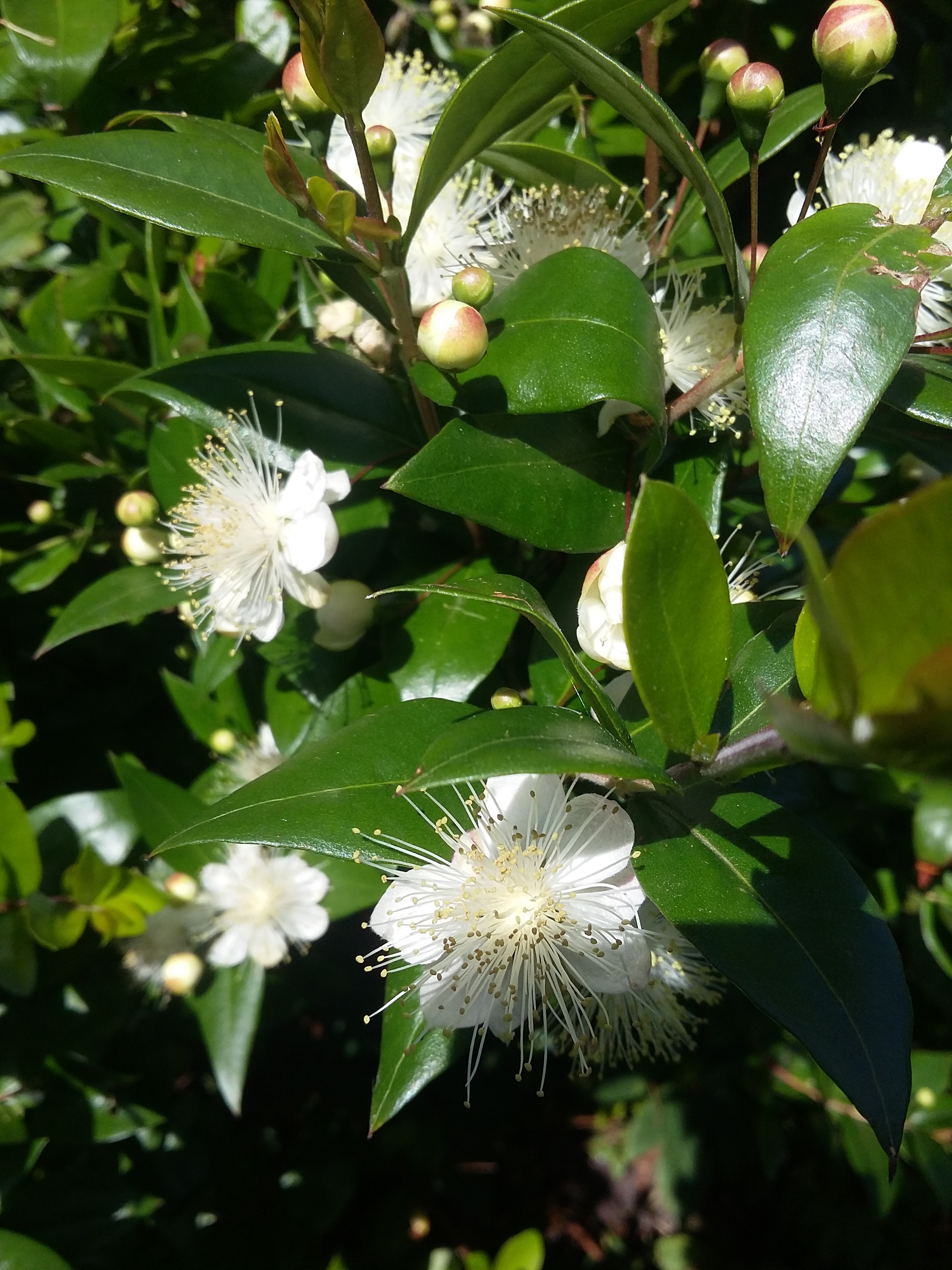
When I first came to live in my present house, I bought some scented plants and trees. One of these was a Mediterranean myrtle tree, myrtus communis. It has cinnamon–red bark, bright shining leaves, and delicate pink-backed white flowers with bottle green sepals framing golden tassels of stamens. These are followed by small purple-black berries and every part is scented. It mostly flowered in late June and early July, blooming on my birthday. For many years I’d take branches with other fragrant flowers from the garden, roses, jasmine and lilies to decorate the annual exhibitions of textiles, art and craft work at the adult learning centre, which I headed at that time.
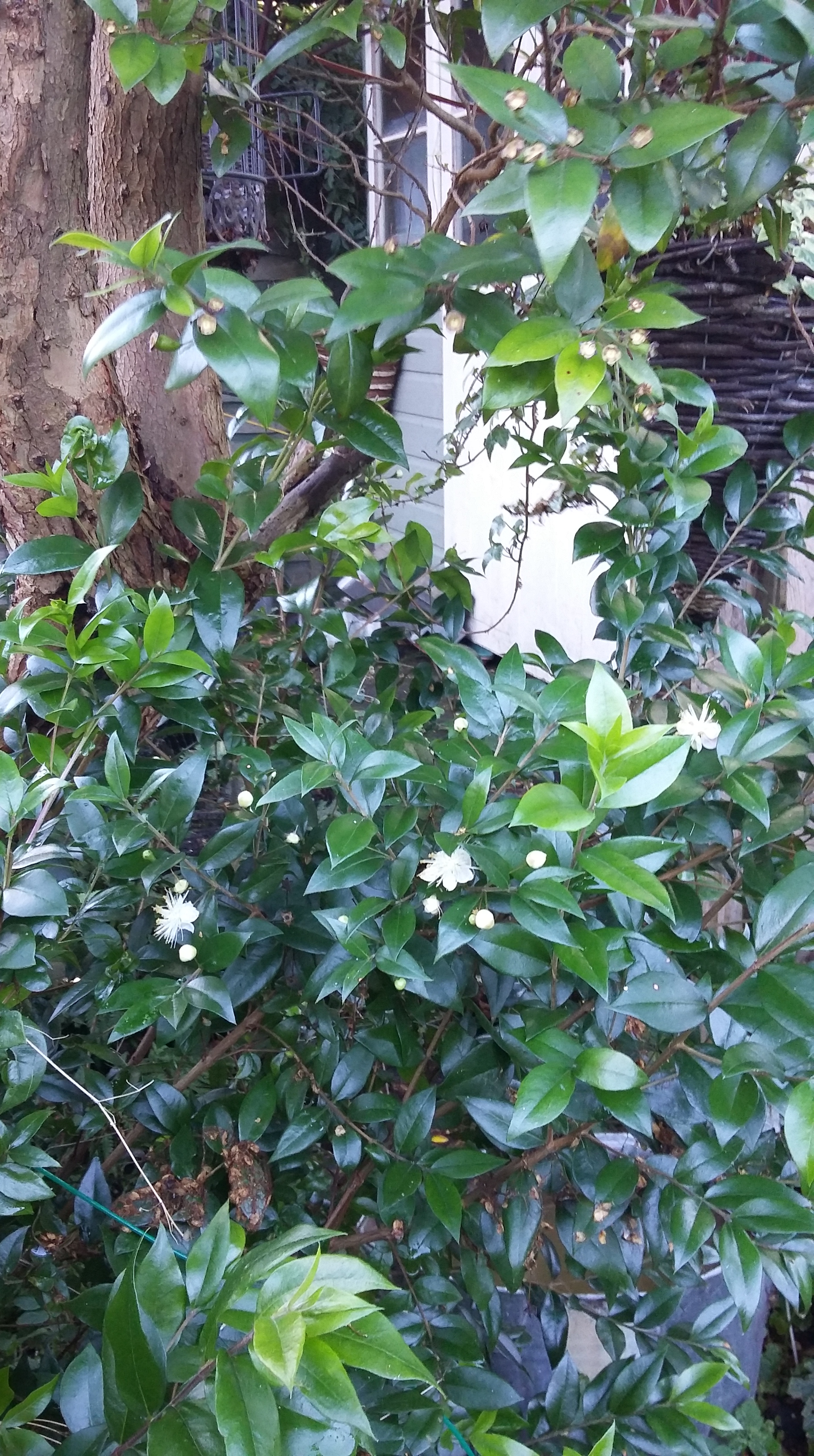
The first time I brought Anne to my house, many Augusts ago, I showed her the myrtle tree, this year late in flower, and we took flowers back to the summer music project site, which was where we had met. Summer Music took place each year in Myrtle Street in Liverpool and we enjoyed the coincidence.
When we married two years later, myrtle flowers and leaves decorated the church and were in Anne’s wedding bouquet. Every year, myrtle flowers were picked to scent the house and myrtle berries to flavour Christmas puddings, jams and biscuits.
The myrtle tree grew and dominated the very small area of lawn. Anne wanted a bigger lawn and asked if we can take it down. I protested that it was a rarity, a beautiful tree with many associations in our lives together. Over the years, none of the cuttings and seedlings from the tree had succeeded in growing independently. With the roots spreading 3 metres in each direction at a height of over 5 metres, I didn’t think that it could be moved and survive. I could not buy an exact replacement to plant elsewhere.
We continued to disagree about the tree, for a while.
I rang “Gardeners Question Time” on BBC Radio Four. They recorded me asking a question about the tree. The panel of experts said that the tree could not safely be moved, that I could clip it and shape it into a better form and perhaps try layering or air-layering to get some of the branches to form their own roots, then be detached to grow independently to plant out somewhere away from the lawn. You can hear an extract here:
This recording was for the program to use at some future unspecified time and I didn’t tell Anne about it,
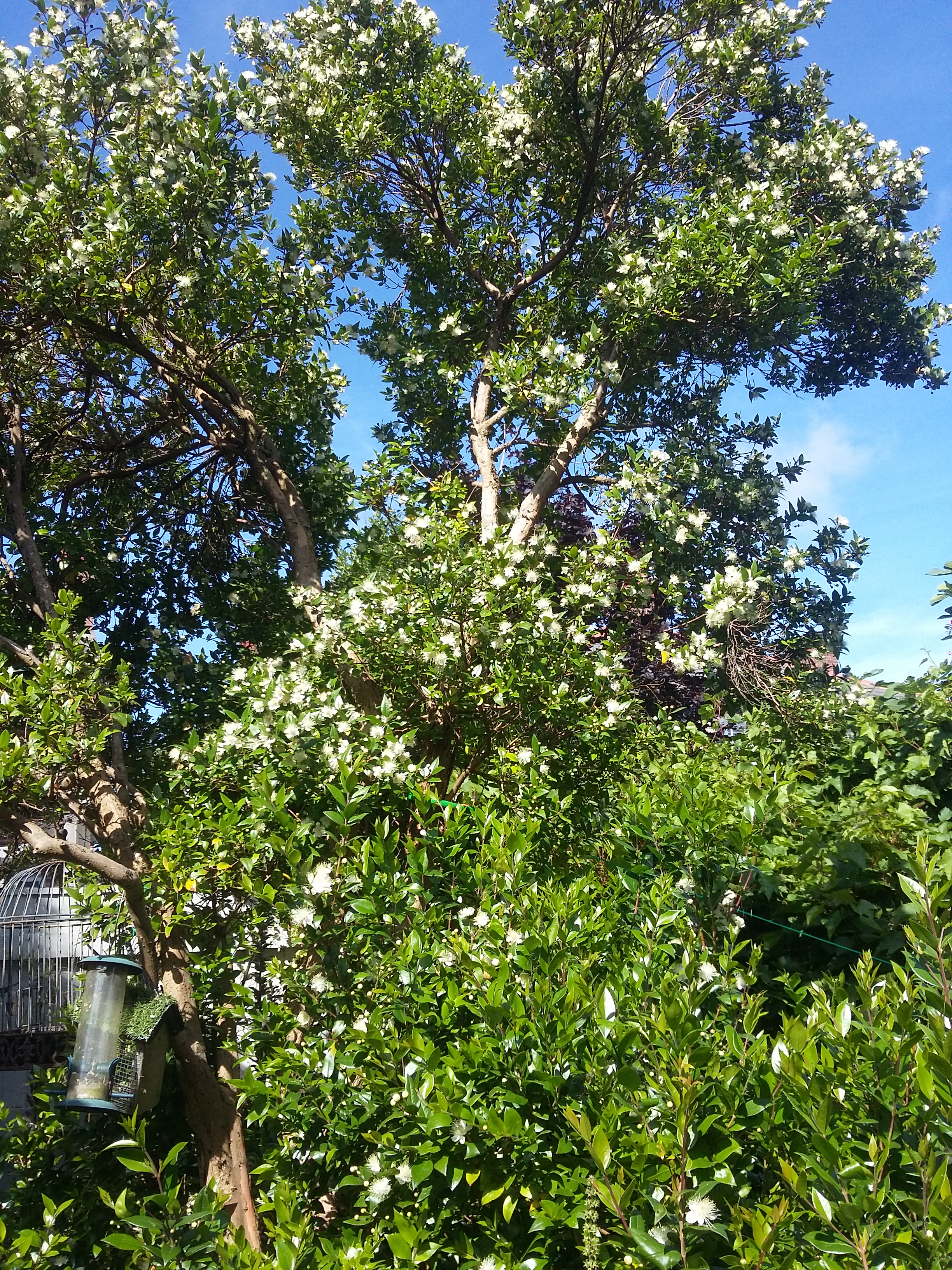
Later that week, on the Friday, Anne was leaving the school where she worked and switched on the radio in her car. At that exact moment she was surprised to hear my voice on the radio, asking the question about the myrtle. She heard the replies and, very amused and delighted that she’s been ambushed with the question and conclusions, agreed to save the myrtle tree in its current position, at least until such time as we succeeded in propagating a replacement tree. In the next years, the tree thrived. After the trimming and pruning, it flowered each year, very heavily and for several months, the scent filled the whole garden. It was the largest and loudest part of the garden, as the flowers attracted wild bees and honeybees, so the air was filled with contented humming and buzzing. Three branches were pinned down as layers from the base of the tree, grew successfully and were potted on. The main tree continues to grow in the same place and we started creating a lawn in the remaining area. Alongside this, Anne and I, now in full agreement, created an area for outdoor meals and drinks, looking out on the myrtle between a magnolia and an olive tree. This main lawn work is still not finished, but the myrtle tree continues to thrive. We had time to enjoy this and to plan to make a seat under the myrtle, before Anne died suddenly in October, 2020. I had a small posy of myrtle leaves and a few very late flowers to place on her coffin.
A year later, the flowers continue to cover the whole tree, not in June as it used to, but providing many bunches for what would have been our 25th Anniversary in August. The tree is full of bees, sound and scents. Additionally, on the 1st anniversary of her death in October, some of the lower branches were suddenly full of blossom, a further, second, show of flower buds alongside the hundreds of ripening berries.
I cannot explain the sense of peace, harmony and forgiveness that this flowering in October has given me. Whenever I smell or see the blossom, the memories of a loving marriage will be there.
 Ellwandery